AI Exclusions Explained in Under 3 Minutes: Is Your Small Business Unprotected?
- gabeinsurancesolut
- Apr 28
- 5 min read
It’s 2026. If you’re running a small business in Texas, you’re likely using AI. Maybe you’re using it to draft social media posts, analyze your sales data, or even help with customer service through a chatbot. It feels like a superpower for a small team, doesn’t it?
But there’s a quiet shift happening in the insurance world that could leave your business exposed. While you’ve been busy scaling, insurance carriers have been busy updating their rulebooks. Specifically, new "AI Exclusions" are making their way into standard General Liability and Cyber policies.
If you haven’t reviewed your policy since the start of the year, you might be flying without a parachute. Let’s break down what’s happening, why it matters for your Texas business, and how you can stay protected in under three minutes.
The 2026 Shift: Why AI Exclusions Exist Now
In the past, insurance policies were often silent on AI. If your AI-generated content accidentally defamed a competitor or used a copyrighted image, your "Personal and Advertising Injury" coverage might have stepped in to help.
However, as of January 2026, the Insurance Services Office (ISO) introduced specific endorsements that carriers are now using to explicitly exclude these risks.
Insurers don’t like unpredictability. Because AI can generate thousands of pieces of content or data points in seconds, the potential for a "mass error" is too high for standard premiums. To protect themselves, they’ve added two main "fences" you need to know about:
ISO CG 40 47: This is the broad one. It essentially says, "If it involves AI, we aren't covering it." This includes bodily injury, property damage, and advertising injury.
ISO CG 40 48: This is a bit narrower. It focuses mostly on excluding "Personal and Advertising Injury."
If either of these codes appears on your policy declarations page, your standard coverage for AI-related mistakes is likely zero.
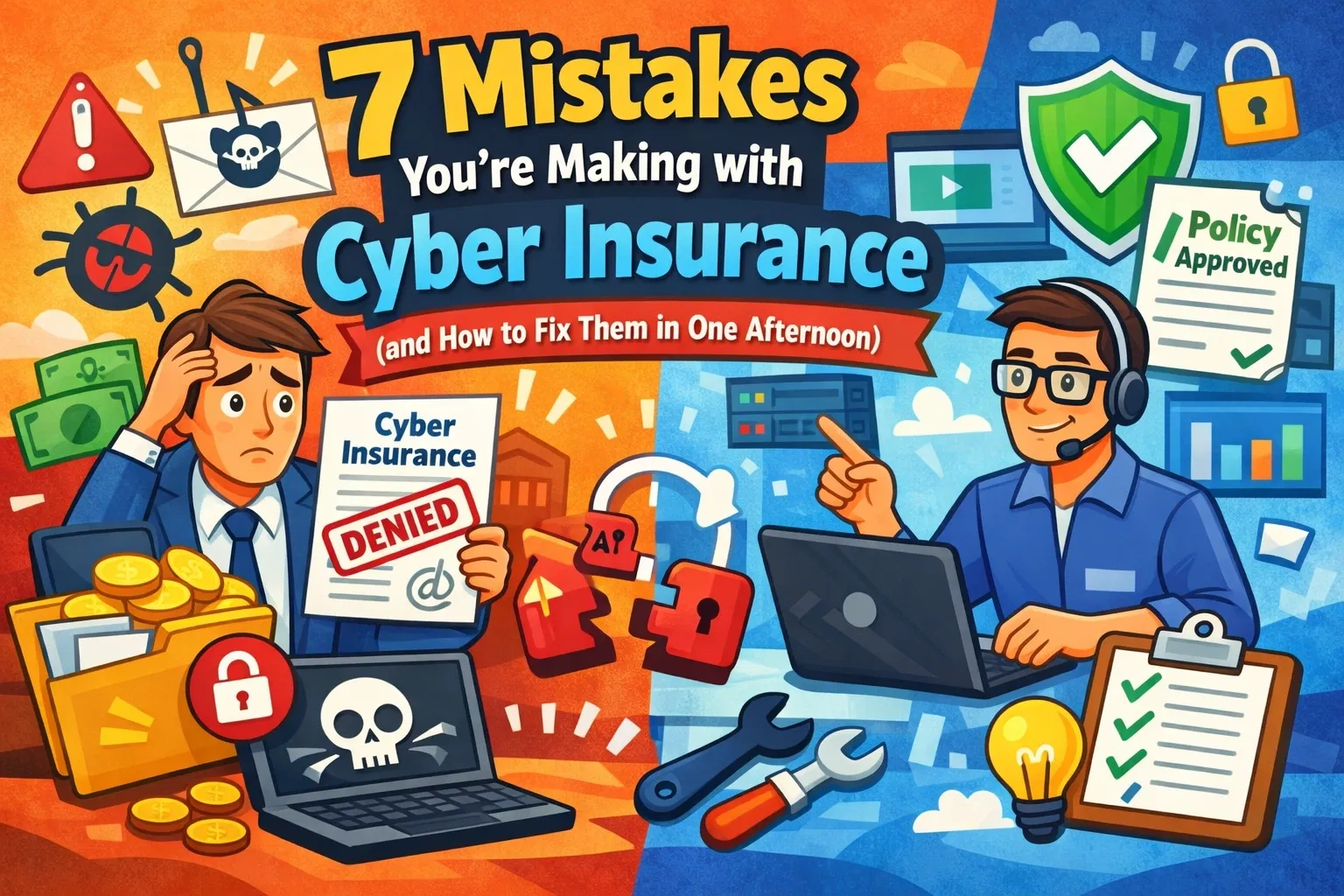
Is Your Small Business Unprotected?
Most small business owners assume that "Cyber Liability" covers anything digital. Unfortunately, that’s one of the most common mistakes we see. Standard cyber insurance is undergoing its own set of cyber insurance updates to account for AI-driven threats.
Here are three ways your business could be vulnerable right now:
1. The "Copy-Paste" Copyright Trap
If you use generative AI to create marketing materials and that AI accidentally pulls a trademarked logo or a copyrighted photo into your design, you could be sued for infringement. With an AI exclusion in place, your General Liability policy won't pay for your legal defense or the settlement.
2. The Chatbot Hallucination
Imagine your customer service bot gives a client advice that leads to property damage or financial loss. If your policy has a total AI exclusion, that claim could be denied instantly, leaving you to pay out of pocket.
3. Data Privacy and AI Training
If your business uses an AI tool that "learns" from the data you feed it, you might accidentally be sharing sensitive client information with a third-party AI model. This can trigger a data breach. Many cyber liability for small business policies are now being written with specific language that limits coverage if the breach was caused by "unauthorized AI data processing."
How to Check Your Policy in 3 Minutes
You don't need to be a lawyer to see if you're at risk. Grab your current policy and look for these three things:
The Declarations Page: Scan for form numbers starting with "CG 40." If you see CG 40 47 or CG 40 48, you have an AI exclusion.
The Definitions Section: Look for the word "Artificial Intelligence." If it’s defined broadly, it means the exclusions apply to almost any automated tool you use.
The Cyber Addendum: Check if your cyber liability policy has been updated for 2026. Newer policies often require you to disclose your AI usage to maintain coverage.
If you’re unsure what you’re looking at, it might be time for a free coverage review. It’s better to find a gap now than during a claim.
The Strategic Solution: Bridging the AI Gap
Just because there are exclusions doesn't mean you have to stop using AI. It just means you need to be strategic about your cyber insurance updates.
As an advisor, I recommend three steps to keep your Texas business safe:
1. Seek "Carve-Backs"
Sometimes, we can negotiate with carriers to "carve back" coverage for specific AI uses. For example, if you only use AI for internal data analysis and not customer-facing content, we can often get that specific risk covered.
2. Specialized Tech E&O
If your business is tech-heavy, a standard General Liability policy was never enough. You likely need Technology Errors & Omissions (E&O) insurance. In 2026, many of these policies are being specifically designed to include AI risks that standard policies are running away from.
3. Governance is Your Best Insurance
Insurers are more likely to offer you better rates and fewer exclusions if you can show you have an "AI Use Policy" in place. This tells the carrier that you aren't just letting AI run wild: you have human oversight.
Why the Texas Market is Different
In Texas, we pride ourselves on being business-friendly and early adopters of tech. From the tech hubs in Austin to the energy sector in Houston, AI is driving our economy forward. But because our market is so active, Texas businesses are often bigger targets for litigation.
The new 2026 insurance rules are hitting our state particularly hard because carriers are trying to manage their exposure in a high-growth environment. Navigating these 2026 insurance regulation updates is about more than just checking a box: it's about protecting the legacy you're building for your family and your employees.
Quick Takeaways for the Busy Owner
Check for CG 40 47/48: These are the codes that mean your AI use is likely excluded.
Update your Cyber Insurance: Don't assume your 2024 or 2025 cyber policy covers 2026 AI risks.
Human in the Loop: Always have a human review AI-generated content or advice before it goes to a client.
Consult an Expert: Don't wait for a "Claim Denied" letter to find out you're unprotected.
At Eagle-Watch Solutions, we believe in watching over what matters most. Whether it's your Texas small business or your family's future, staying ahead of these tech shifts is the best way to stay secure.
If you’re worried that your current policy is stuck in 2025 while your business is operating in 2026, let’s chat. We can run through your current coverage and see exactly where you stand.
Ready to make sure your business is actually covered?Get quoted today or reach out for a Free coverage review.
Comments