Why Everyone Is Talking About "Risk Stacking" (And You Should Too)
- gabeinsurancesolut
- Apr 4
- 5 min read
It’s 2026, and the business world feels faster than ever. We have AI managing our schedules, drones delivering packages in Dallas, and instant approval for almost any type of credit or insurance policy. But with all that speed comes a hidden danger that’s been quietly climbing the priority list for insurance professionals and business owners alike.
It’s called "Risk Stacking."
If you haven’t heard the term yet, don't worry, you’re about to. In the world of risk management, this is the "silent killer" of small businesses and the primary headache for modern underwriters.
At Eagle-Watch Solutions, we’ve been tracking this trend closely because it changes how we look at protection. It’s no longer just about "do you have a policy?" It’s about "how many layers of hidden risk are piled on top of each other before the whole thing topples?"
What Exactly Is Risk Stacking?
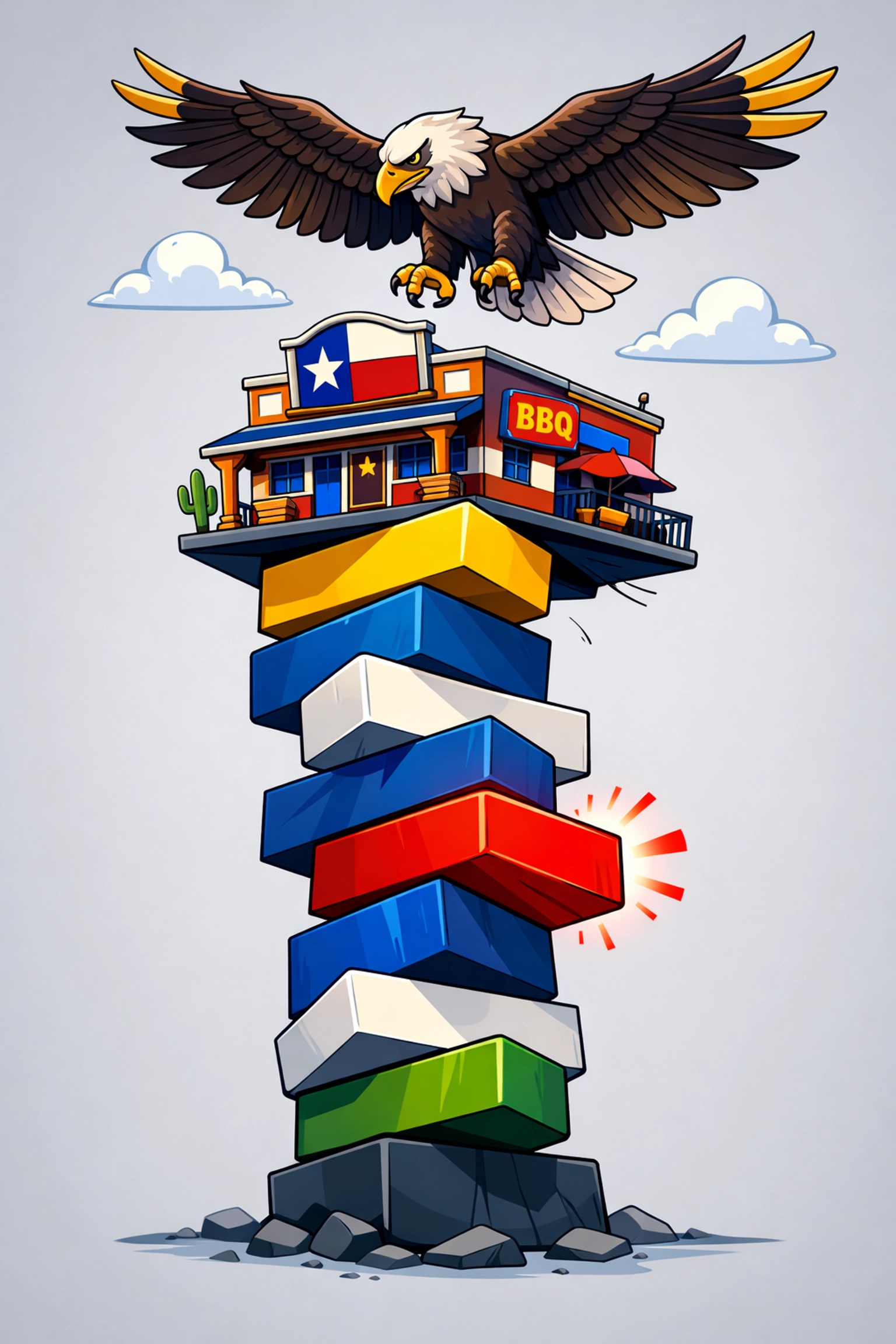
Think of your business like a game of Jenga. In a perfect world, your blocks are aligned, your foundation is solid, and if one piece moves, the tower stays upright.
Risk stacking is what happens when you start pulling blocks from the bottom to fill gaps at the top, while simultaneously adding more weight to the peak. Individually, a single missing block might not be a big deal. But when you have three missing blocks, a shaky table, and a gust of wind from an open window, the tower isn’t just at risk, it’s destined to fall.
In insurance and finance terms, risk stacking is the accumulation of multiple, seemingly minor vulnerabilities that compound together. When they hit at the same time, they create a systemic failure that’s much larger than the sum of its parts.
The 2026 Landscape: Why Now?
Why is this suddenly the hot topic in 2026? A few factors have converged to create a "perfect storm" for Texas business owners:
Hyper-Speed Lending: It’s easier than ever to get a line of credit or a bridge loan.
Regulatory Shifts: New 2026 insurance regulation updates mean some old "safety nets" aren't what they used to be.
Inflationary Pressure: Costs for materials and labor in Texas have remained volatile, forcing owners to cut corners in places they shouldn’t.
The Danger of the "Stacked" Loan
One of the most common forms of risk stacking we see is actually "loan stacking." This is when a business owner takes out multiple loans from different lenders at the same time without full disclosure.
According to the Federal Reserve’s Small Business Credit Survey, nearly 20% of small businesses are now holding loans from multiple lenders. While that might seem like a smart way to get cash fast, it’s a massive red flag for your insurance profile.
Default Potential: Research shows that 30% of businesses engaging in loan stacking face closure within five years.
Interest Spirals: When lenders (or carriers) realize you’re over-leveraged, your rates skyrocket.
Coverage Gaps: If your business is drowning in debt, you're more likely to skip a premium payment or lower your coverage limits to save a buck: exactly when you’re at your most vulnerable.

How Risk Stacking Hits Your Insurance Policy
For a business owner, risk stacking isn't just a financial problem; it’s a coverage problem. When you stack risks, you often inadvertently violate the terms of your liability and property coverage.
Imagine you own a small construction firm in San Antonio. You’ve taken on three new projects (Growth!), but you couldn't find enough skilled labor, so you hired a few "unvetted" subcontractors (Risk 1). To fund the materials, you took out a high-interest short-term loan (Risk 2). Because you’re busy, you missed the memo on the new 2026 Texas surcharge, and your budget is now tighter than expected (Risk 3).
If a worker gets injured on-site, you aren't just dealing with a workers' comp claim. You’re dealing with a claim that might be denied due to unvetted subs, a bank that’s ready to call in a loan because of a legal dispute, and a cash flow crisis caused by that surcharge.
That is risk stacking in action.
Red Flags: Is Your Business Stacking Risk?
Most business owners don’t set out to "stack risk." It happens slowly. Here are the red flags we tell our clients to watch out for:
Multiple Debt Sources: If you have more than two active lenders for the same business entity.
Declining Property Maintenance: If you’re pushing off repairs to save capital for operations.
Vague Subcontractor Agreements: If you’re "shaking hands" instead of checking COIs (Certificates of Insurance).
Ignoring Regulation Updates: If you haven’t reviewed your policy since the 2026 changes took effect. You can check out our guide on 7 things you should know about 2026 updates to see where you stand.
The Professional’s Perspective: How to "Unstack"
If you’re an insurance professional reading this, your job has shifted. You’re no longer just a policy seller; you’re a risk architect.
At Eagle-Watch Solutions, we believe the only way to combat risk stacking is through a policy audit and free coverage review. You have to look at the business holistically.
1. Transparency is King
The biggest driver of risk stacking is a lack of communication. Business owners need to be honest with their agents about their debt load and their operational shortcuts. It’s better to pay a slightly higher premium for the right coverage than to have a claim denied when you're already in a financial hole.
2. Strategic Coverage Guidance
Don't just buy the cheapest "best insurance for small businesses" you find online. You need strategic coverage guidance that understands P&C carrier trends in 2026. Carriers are getting smarter: they use AI to detect risk stacking before you even file a claim.
3. Delinquency Strategies
Have a plan for when things go south. If a business owner knows they’re going to miss a payment or struggle with a loan, they need to engage with their partners (carriers, agents, lenders) early.

Quick Takeaways for Business Owners
Stop the Stacking: Before taking that third "instant" business loan, look at your overall debt-to-insurance ratio.
Audit Your Assets: Ensure your property valuation is up to date. In 2026, replacement costs in Texas are significantly higher than they were just two years ago.
Get a Second Opinion: Even if you think you’re covered, a quick free coverage review can identify where the "stack" is getting too high.
Stay Informed: The laws are changing. Don't let a 2026 regulation update be the block that topples your tower.
Why Eagle-Watch Solutions?
We aren't just here to sell you a piece of paper. We’re here to watch over what matters most. Whether you’re a trucking company navigating new compliance checklists or a local boutique owner trying to understand your liability, we provide the clarity you need to stay upright.
Risk stacking is a real threat in 2026, but it’s manageable if you have the right eyes on your business.

Ready to see where your business stands?
Don't wait for the tower to lean. Let's get ahead of the curve together.
Get quoted today to find a plan that fits your actual risk profile.
Request a free coverage review to identify any "stacked" risks you might have missed.
Visit us at www.eaglewatchsolutions.com and let’s make sure your business is built on a foundation of solid protection, not a stack of cards.
Comments