How to Choose the Best Cyber Protection (Compared for Families and Small Biz)
- gabeinsurancesolut
- Jun 15
- 5 min read
It’s a quiet Tuesday afternoon in Texas. You’re finishing up some emails at a coffee shop in Frisco, or maybe you’re at home in Plano, scrolling through your bank app. Suddenly, you get a notification that looks like a text from your bank: or worse, a "message" from your daughter asking for money because she’s "stuck."
In 2026, the digital world is a lot like the Texas weather: it changes fast, and if you aren’t prepared for the storm, it can leave a mess.
At Eagle-Watch Solutions, we see the data every day. Cyber threats aren't just for big tech companies anymore. They’re hitting local boutiques, family-run HVAC shops, and even your kitchen table.
But here’s the good news: you don't need to be a computer scientist to protect yourself. You just need to know which "shield" fits your life. Let’s break down the best way to choose cyber protection for your family versus your small business.
Why Cyber Protection is Non-Negotiable in 2026
The risk landscape has shifted. We’re seeing a massive rise in "relationship-based AI scams." This is where hackers use AI to mimic the voices or writing styles of people you know. For a Texas small business, this might look like a fake invoice that looks 100% real. For a family, it might be a deepfake audio clip of a relative in trouble.
In North Texas alone, the average cost of a cyber incident for a small firm has climbed past $200,000. For families, the cost isn't just financial: it’s the hours of stress spent fixing identity theft or recovering digital photos that have been "locked" by ransomware.
Quick Takeaways:
Small Businesses: 60% of attacks now target firms with fewer than 100 employees.
Families: Over 24 billion username/password combos are currently on the dark web.
The Bottom Line: If you're online, you're a target. But you can be a hard target.
For the Family: Your Digital Home Security

Think of personal cyber insurance as an "umbrella" for your digital life. Most Texas families don't realize that their standard homeowners' policy might not cover a sophisticated AI-driven fraud or a massive data breach of their personal accounts.
What it Covers
Personal cyber protection usually isn't a standalone policy; it’s often an affordable add-on. It focuses on:
Online Fraud Reimbursement: If someone drains your payment apps or hacks your bank account.
Cyber Extortion: Help if a hacker locks your family photos or devices and demands money.
Identity Recovery: Professional help to restore your credit and identity after a theft.
Cyberbullying Support: Legal and mental health resources if your children are targeted online.
Is it Right for You?
You should seriously consider family cyber protection if:
You manage high-value investments or multiple bank accounts online.
You have kids or teens who are active on social media and gaming platforms.
You work from home and use personal devices for sensitive tasks.
Pro-Tip: Check your current homeowners or renters policy first. You might be able to add this protection for less than the cost of a couple of brisket sandwiches a year. Free coverage review can help you find these gaps.
For the Small Biz: Protecting Your Livelihood
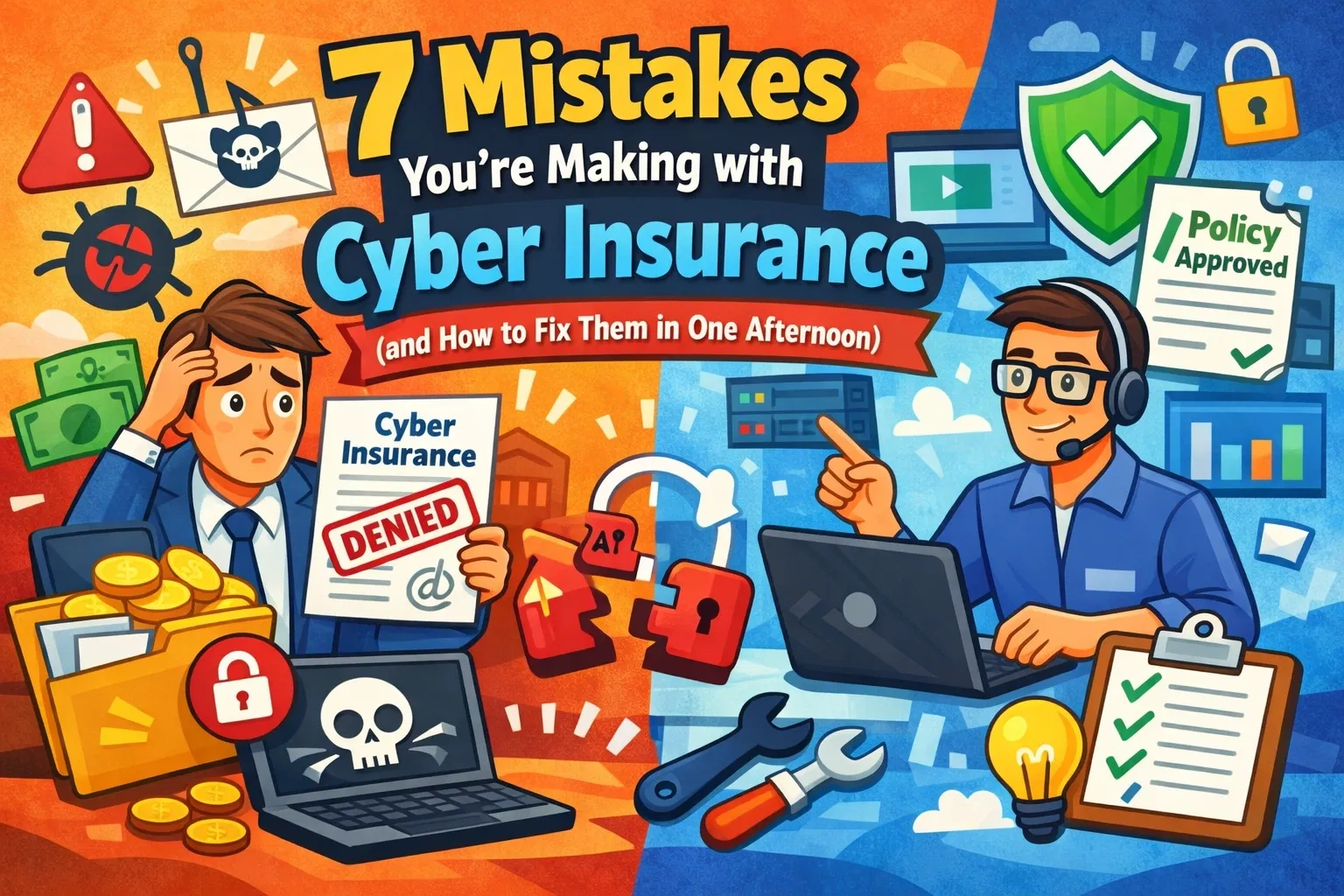
For a business, cyber insurance isn't just about reimbursement: it’s about survival. When a Texas small business gets hit by ransomware, the doors often stay closed until the "digital plumbing" is fixed.
What it Covers
Commercial cyber insurance is a "heavy-duty" policy. It’s designed to handle:
Business Interruption: Replaces lost income while your systems are down.
Data Breach Response: Pays for forensics (finding out how they got in), notifying customers, and providing credit monitoring.
Regulatory Fines: Texas has specific laws about data privacy. If you lose customer data, the state might come knocking. This coverage helps pay those penalties.
Ransomware Negotiations: Access to experts who deal with hackers so you don't have to.
The 2026 Standard
In the past, you could get a policy just by signing a paper. Not anymore. In 2026, most carriers require "Phishing-Resistant MFA" (Multi-Factor Authentication) and regular backups before they’ll even give you a quote.
If you haven't updated your security lately, you might find yourself among the 73% of small businesses that currently fail to meet insurance requirements. Don't wait until you're denied coverage to fix your tech.
Get quoted today to see where your business stands.
Side-by-Side: Family vs. Small Biz

Feature | Family Protection | Small Biz Insurance |
Main Goal | Protecting personal assets & reputation | Protecting cash flow & customer data |
Primary Threat | Identity theft & AI voice scams | Ransomware & invoice fraud |
Average Cost | $50 - $300 / year (as an add-on) | $1,200 - $6,500 / year (standalone) |
Typical Requirement | Strong passwords & basic MFA | Endpoint detection, backups, & IR plans |
Who is it for? | Anyone with a bank account & kids | Anyone who takes digital payments |
The "Afternoon Update": Climate Risks and Your Tech
We can’t talk about risk in Texas without mentioning the weather. You might wonder: What does a heatwave or a winter storm have to do with my cyber protection?
Actually, a lot.
Strategic risk management in 2026 means looking at "cascading risks." When the Texas grid is under stress or we face extreme weather, we see an uptick in digital vulnerabilities.
Infrastructure Failures: Power outages can crash local servers, and if your backups aren't cloud-based, you could lose data.
Scam Surges: After a major storm, scammers come out of the woodwork, pretending to be FEMA or insurance adjusters. They use digital tools to target vulnerable residents.
Choosing the right protection means ensuring your policy covers "contingent business interruption": essentially, coverage for when someone else's failure (like a power provider or a cloud host) shuts you down.

5 Simple Steps to Secure Your World This Afternoon
You don't need to do everything at once. Take these five steps before 5 PM:
Audit Your MFA: If you use "text message" codes for your bank or business email, switch to an authenticator app. It’s much harder for hackers to spoof.
Check Your Limits: Look at your current insurance. Do you have a $0 limit for cyber? Most standard policies do.
Update Your "Contact Me" Rules: Tell your family and employees: "I will never ask you for money or a password change via a sudden text or voice note. If you get one, call me on my known number first."
Secure Your Backups: For businesses, ensure your backups are "immutable": meaning they can't be changed or deleted by a hacker who gets into your main system.
Talk to a Texas Expert: Every state has different rules. Ensure your agent understands the Texas market and the specific threats we face here.
Final Thoughts: Protecting What Matters Most
Whether you’re protecting your family’s digital legacy or the business you’ve spent a decade building, the key is proactive thinking. Cyber protection isn't just another bill; it's the digital fence around your property.
In 2026, the best protection is a combination of good habits and strategic coverage. You handle the habits; we’ll help you with the strategy.
Stay safe, stay vigilant, and remember: we’re watching over what matters most.
Ready to see where you stand? Visit us at www.eaglewatchsolutions.com to learn more about how we help Texas families and businesses grow with confidence.

Summary of Actions
Families: Call your agent to see if a cyber endorsement can be added to your homeowners' policy.
Businesses: Request a Free coverage review to ensure your current tech controls meet 2026 insurance standards.
Everyone: Stay informed by following our blog for the latest updates on Texas insurance regulations.
Comments